
A New Era for Red-Ball Cricket: The Expansion of the WTC to 12 Teams
Table of Contents
ToggleIntroduction:
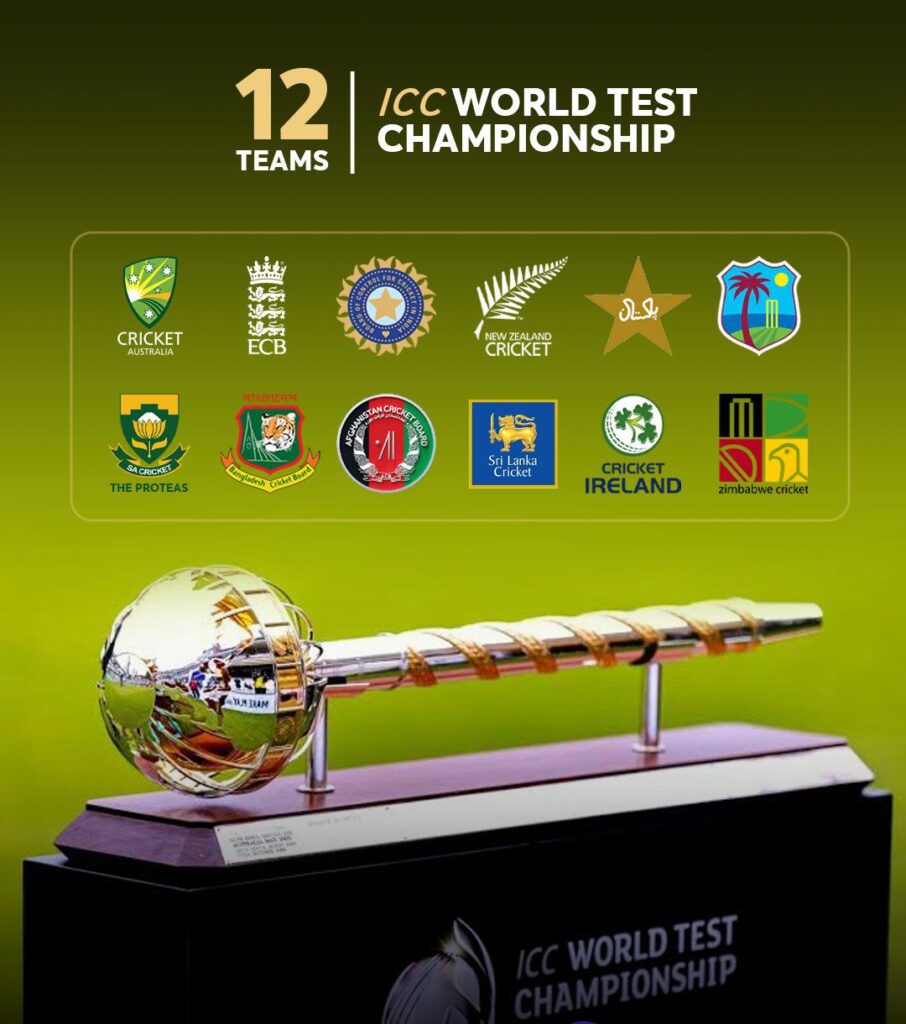
The landscape of Test cricket is on the verge of a historic shift. The International Cricket Council (ICC) is preparing a blueprint to expand the World Test Championship (WTC) from its current 9-team format to a more inclusive 12-team single division.
Expected to be implemented in the 2027–2029 cycle, this proposal aims to integrate emerging full-member nations into the premier red-ball competition, providing them with much-needed context, regular fixtures, and a clear pathway in the longest format of the game.
The New Challengers: Who is Joining?
Since its inception in 2019, the WTC has featured only the top nine Full Member nations. The proposed expansion would finally bring the remaining three Full Members into the fold:
Afghanistan: Known for their meteoric rise in white-ball formats, Afghanistan has shown flashes of brilliance in Test cricket but has lacked consistent exposure to top-tier red-ball teams.
Ireland: Having earned their maiden Test victory recently, Ireland has proven they have the temperament for the five-day game and are hungry for regular international series.
Zimbabwe: A traditional cricketing nation that has struggled with administrative and financial hurdles, Zimbabwe’s inclusion would mark a vital revitalization of their storied Test history.
The Catalyst: The “One-Off” Test Rule
Integrating three new teams into an already congested international calendar is a massive logistical challenge. To make this 12-team model viable, an ICC working group—led by former New Zealand batter Roger Twose—has proposed a crucial rule change: allowing one-off Test matches to count towards WTC points.
Currently, a WTC series must consist of at least two Test matches. However, larger cricket boards often view two-match series against lower-ranked nations as a financial loss. By permitting single-match series, the ICC hopes to achieve two things:
Financial Viability: Bigger boards (like the BCCI, ECB, or CA) can host smaller nations for a single, heavily promoted Test without committing to a full, loss-making series.
Schedule Flexibility: One-off Tests can be easily attached to existing tours. For instance, Zimbabwe could play a single WTC Test against South Africa during a white-ball tour, or England could host Ireland for a one-off summer Test while primarily focusing on a larger five-match series against a traditional rival.
Note on the Two-Tier System: The ICC previously floated the idea of a two-division (tier) Test model in late 2025. However, this was overwhelmingly rejected by several Full Member boards, leading the working group to pivot toward this inclusive 12-team, single-division approach.
| Feature | Current WTC Model (2019–2027) | Proposed WTC Model (2027–2029) |
| Number of Teams | 9 | 12 |
| New Entrants | N/A | Afghanistan, Ireland, Zimbabwe |
| Minimum Series Length | 2 Matches | 1 Match (One-off Tests allowed) |
| Structure | Single Division | Single Division |
| Primary Challenge | Lack of context for non-WTC teams | Balancing the financials of hosting smaller teams |
What This Means for Global Cricket
The move to a 12-team Championship represents a critical balancing act by the ICC. The governing body is fighting to keep Test cricket relevant and financially sustainable in an era dominated by franchise T20 leagues.
By bringing Afghanistan, Ireland, and Zimbabwe into the World Test Championship, the ICC ensures that all Full Members have a stake in the ultimate prize. It provides smaller nations with a guaranteed baseline of high-profile fixtures, which is crucial for their domestic broadcasting deals and overall cricketing development.
Ultimately, if the board approves these recommendations, the 2027–2029 World Test Championship cycle will not just be a competition for the elite—it will be a true, global celebration of cricket’s oldest and purest format.
Fantasy & Dream11 Focus:
If you are building your fantasy teams this season, Follow My Telegram Channel

For Final Team Joined My Telegram Channel